

Costa Rica Essential Information
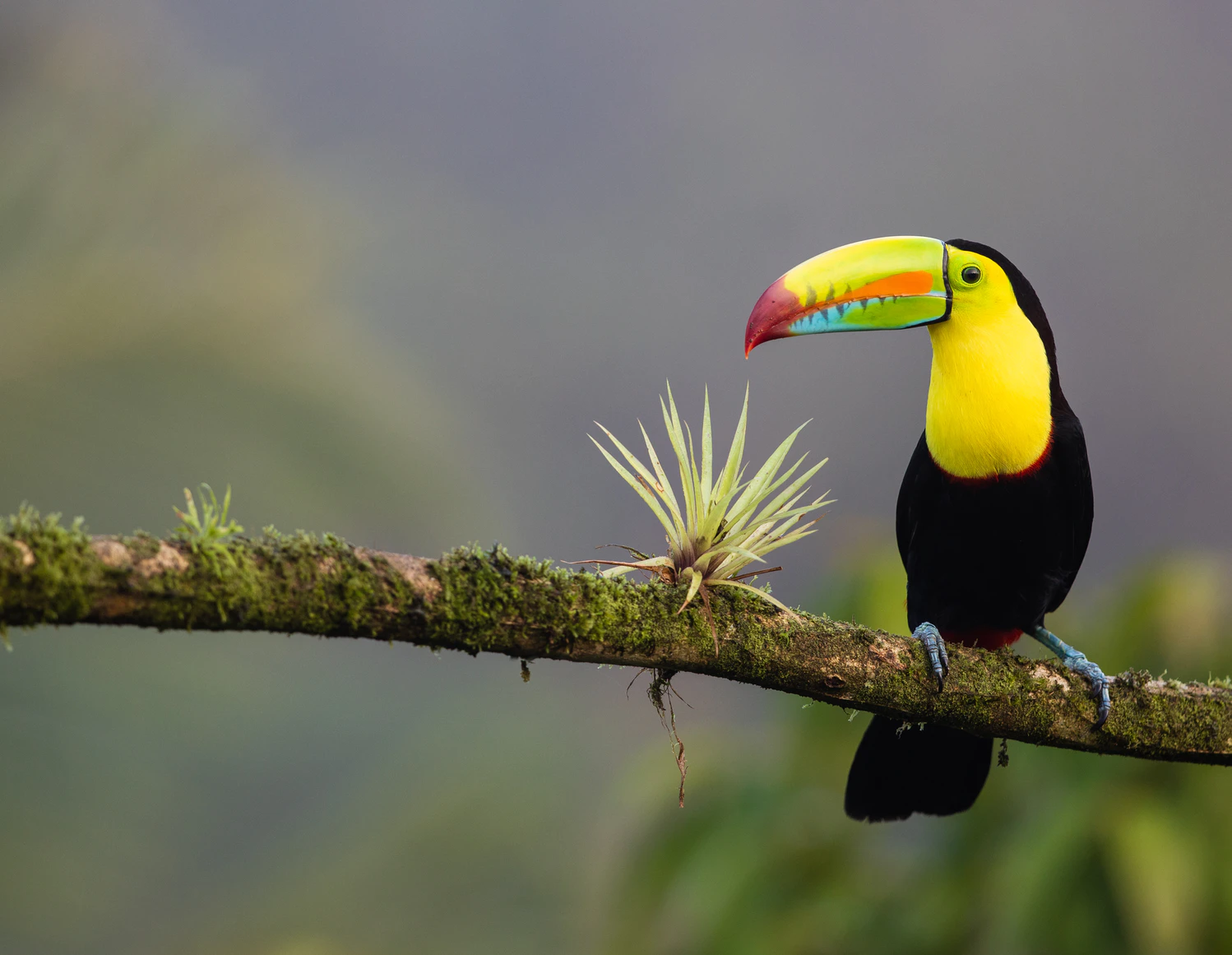


Why we love Costa Rica
Costa Rica is pure vitality – rainforests that move and breathe, volcanoes veiled in mist and beaches where the surf never sleeps. Parrots streak across the sky, mornings begin in the waves and jungles fade into cloud forest. It’s where energy feels effortless – and adventure always close by. This guide shares the essentials to know before you go.
Entry requirements
Most travellers, including UK and US passport holders, don’t need a visa for stays of up to 90 days. Your passport must be valid for at least the length of your stay. If you’re flying via the US, remember you’ll need an ESTA. Immigration officers may ask for proof of onward travel, so it’s handy to have a return ticket to show
It’s worth noting that Yellow Fever vaccinations are mandatory if you are arriving from a country at risk of transmission. Please note, if you are over 60 years old, have any serious health conditions or a contraindication to the vaccination, you may be exempt from needing a Yellow Fever vaccination, in which case a medical letter of exemption (MLoE) should be provided, for you to bring with you on your trip.
Health and safety
We are not certified to give medical advice, but we recommend you consult your doctor about your vaccination history and discuss any further vaccinations you may need for your trip. We recommend this website for travel vaccination information and advice on bringing medication into the country.
Getting around
Shared Transfers: The most common way to get between destinations. Comfortable, eco-friendly shuttles pick you up from your hotel and drop you at your next stop.
Private Transfers: Available on request for extra comfort and flexibility, ideal for families or those with extra luggage.
Car Hire: A fantastic choice for independent travellers wanting to explore at their own pace. Ensure you carry enough cash in colones for tolls and minor expenses. Vehicles drive on the right-hand side of the road. Take extra care on rural roads or during heavy rain as road conditions and visibility can vary. Always keep your driving licence, passport, and rental agreement with you, and consider downloading offline maps in case of patchy signal in remote areas. Expect several toll booths on highways (around 300–2,500 colones or $2–$5); while some accept cards, cash in colones is often quicker.
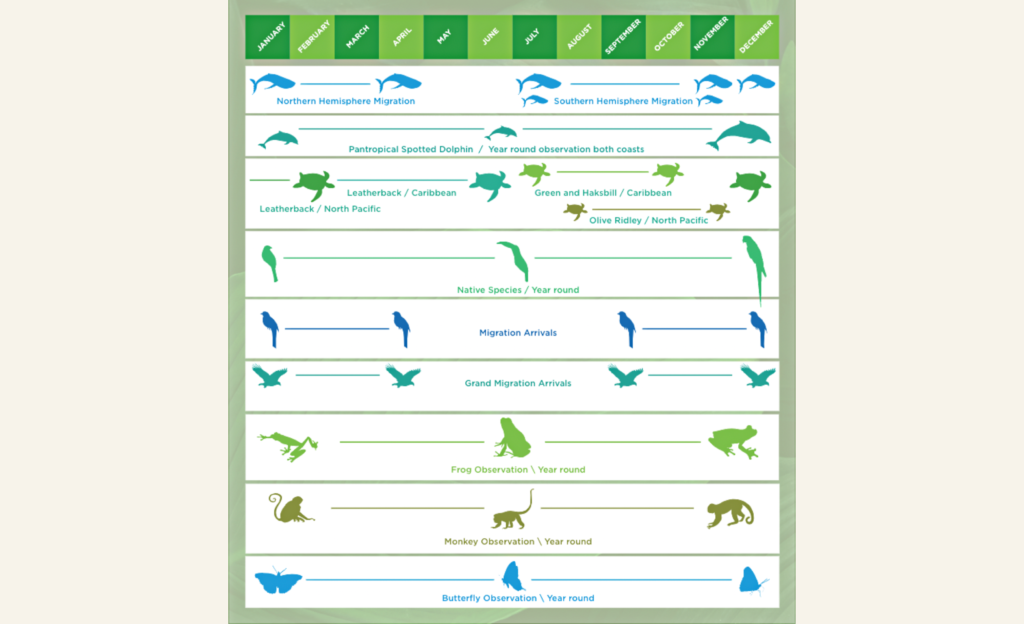
Wildlife sightseeing timetable
Costa Rica’s wildlife never really takes a day off, but some sightings peak in certain months – think turtle nesting in Tortuguero (July–Oct) or humpback whales on the Pacific coast (Aug–Oct). Ask us for a personalised wildlife calendar before you go.
Climate and packing tips
Costa Rica’s tropical climate stays warm year-round, but there is some variation from region to region. Dry season (Dec–Apr) brings the sunniest months with little rain – best for beach days and hiking. Green, or rainy, season (May–Nov) means regular showers, lusher rainforests, and quieter trails – great for wildlife watching.
Always carry overnight essentials and medication in your hand luggage in case of delays or lost luggage. Costa Rica’s landscapes vary from humid rainforests to cooler highlands, so pack for a range of conditions:
Tortuguero
Climate: Humid rainforest, around 26°C year-round.
Pack: Lightweight breathable clothes, long trousers for mosquito protection, waterproof jacket, sturdy shoes or sandals, sunhat and sunscreen, binoculars for wildlife spotting.
Guanacaste
Climate: Hot and dry, around 28°C; rain is rare outside the wet season.
Pack: Light clothes, sunhat, sunglasses, swimwear, sandals, sunscreen, small daypack for excursions.
La Fortuna / Arenal
Climate: Humid, 26°C, with frequent showers.
Pack: Quick-dry clothing, long sleeves for hikes, waterproof jacket, sturdy walking shoes, jumper for cooler evenings, sun protection.
Monteverde
Climate: Misty cloud forest, cooler at 25°C; often damp.
Pack: Warm layers, jumper or sweatshirt, waterproof jacket, sturdy walking shoes, long trousers for treks, suncream for occasional sunny spells.
Central Valley (San José)
Climate: Milder, around 20°C, with moderate rainfall.
Pack: Light layers, jumper for cooler evenings, comfortable shoes for city exploration, sun protection.
South Pacific Coast
Climate: Humid and warm, around 27°C; wet season from May to November.
Pack: Lightweight clothes, swimwear, sunhat, waterproof jacket, sandals or water-friendly shoes, suncream, small daypack for beach and jungle trips.
Pack for a Purpose
Finally, our local team based in Costa Rica have a ‘Travel with Purpose’ scheme set up that allows people visiting to make a meaningful, positive impact on the communities they’ll visit.
The initiative allows people to Pack for a Purpose by using any spare space in their luggage to contribute to local communities. You can bring along small but important items—such as school supplies, basic medical essentials, or hygiene products. If you’d like to take part, you can pack a few items from the recommended list and hand them to your guide or any Costa Rican Trails team member during your trip. Everything will then be delivered to carefully selected local initiatives where it’s genuinely needed. You will also have the opportunity to visit a local community, should you wish to and if time allows.
👉 View the suggested packing list here and learn more about how to get involved.

Laws and customs
Costa Rica is famously relaxed, but there are a few things worth keeping in mind:
– You must be able to show ID if requested by the police. A photocopy of your passport is usually fine if the original can be produced later.
– Plastic bottles are banned in certain protected areas – bring a reusable bottle.
– The country takes wildlife protection seriously. Avoid feeding or approaching animals and always stick to marked trails in reserves and parks.
– Smoking is banned in many public spaces including bus stops and parks.
– Dress is generally casual, but modest clothing is appreciated in rural towns and religious sites.
Take a look at Costa Rica’s laws & customs here.
Tipping
Tipping is a normal part of tourism in Costa Rica, both US dollars and Costa Rican colones are widely accepted, so it’s worth keeping a mix of small notes. Most restaurants automatically add a 10% service charge to the bill, so you don’t need to tip on top unless the service was exceptional.
Here’s what we suggest for guides, drivers and hotel staff:
Airport transfer guides: around $2 per person.
Local day tour guides: $2–$5 per person per day.
Full-day nature or adventure guides: $5–$10 per person per day, depending on the length and quality of the experience.
Full-time private guides for multi-day trips: $8–$10 per person per day.
Drivers for full-day services: $3–$5 per person per day.
At hotels: Porters: $1–$2 per bag. Housekeeping: $2–$3 per night, either left in the room or at reception when you check out.
Money matters
Costa Rica’s currency is the colón (CRC), though US dollars ($) are accepted almost everywhere. Carry both: dollars for tours and tips, colones for markets, small shops, and tolls.
ATMs are common in towns and accept most Visa and Mastercard cards. If paying by card, choose to be charged in colones for a better rate.
Practicalities
Plug types: Costa Rica uses the same plug type as the USA (Type A and B).
Flights and time zone: from London to San José take around 10½ hours. Costa Rica’s time zone is GMT – 6.
Language: Spanish is the official and most widely spoken language in Costa Rica. In popular tourist areas and many hotels, restaurants, and tours, you’ll find English spoken to some extent.
Here are some handy phrases to get you started:
Hello – Hola
Goodbye – Adiós
Thank you – Gracias
Please – Por favor
Yes / No – Sí / No
How much is this? – ¿Cuánto cuesta?
Excuse me / Sorry – Perdón / Disculpe
I need help – Necesito ayuda
Where is the bathroom? – ¿Dónde está el baño?
Food and drink
Costa Rica’s cuisine is simple, hearty, and built around fresh local ingredients – think rice, beans, plantains, tropical fruits, and fresly caught seafood.
Gallo Pinto: The national staple – rice and beans fried together with onions and peppers, usually served at breakfast with eggs, cheese, and tortillas.
Casado: A classic lunch plate of rice, beans, salad, fried plantains, and your choice of meat or fish.
Ceviche: Fresh fish or shrimp marinated in lime juice, herbs, and onions – a coastal favourite.
Olla de Carne: A hearty beef and vegetable stew, perfect after a day of hiking.
Plantains: Served sweet or savoury, these are everywhere – fried, mashed, or baked.
Tap water is generally safe to drink in most cities and tourist areas, but we recommend asking your lodge or guide if unsure – particularly in remote areas.
Keep connected
SIM cards and e-SIMs are easy to get. You can buy one on arrival at San José Airport, and our partners can assist you. Kölbi and Claro are the most reliable local providers, or you can purchase an e-SIM like Airalo before you travel.